The very small minority
One sentence about what everyone else does got thousands of people to pay their tax - and pushed away the people who owed the most. What the research says about social proof, and when it backfires.
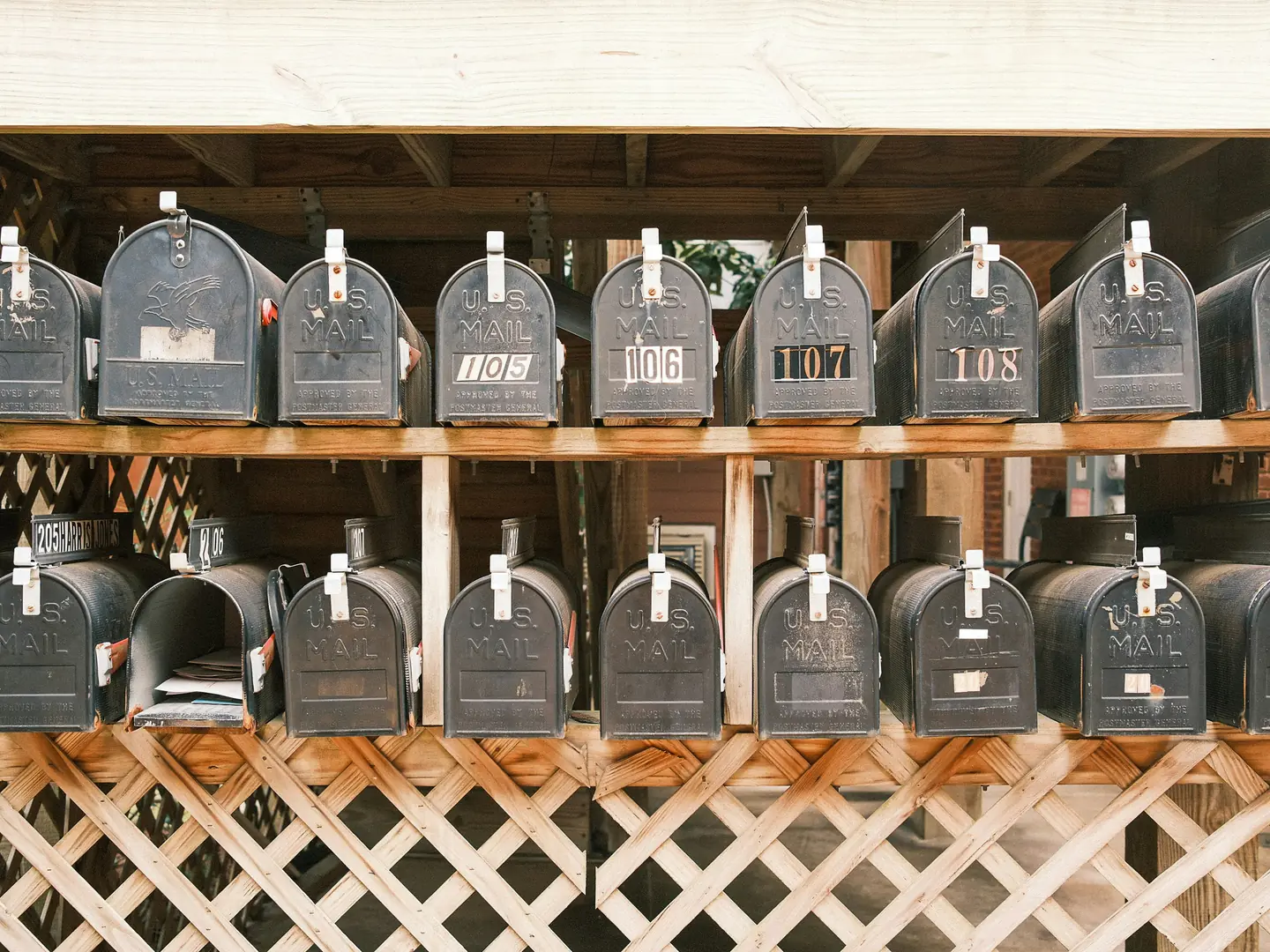
Cover: rows of old mailboxes on wooden shelves. Photo: Pauline Bernfeld, via Unsplash. Hover to see it.
Not long after the UK government set up its Behavioural Insights Team, a civil servant at HM Revenue & Customs called Nick Down got in touch. He’d read Robert Cialdini’s work on social norms.
What followed, in 2011, was one of the largest tests of social proof ever run. More than 100,000 people who were late paying their tax got a reminder letter. Some letters were standard. Others had one extra sentence: “Nine out of ten people in the UK pay their tax on time. You are currently in the very small minority of people who have not paid us yet.”
That sentence lifted payment by about five percentage points within 23 days. Not bad for one line of text.
But there’s a footnote. When the researchers looked at people with the very largest tax bills - £30,000 and above - the same sentence reduced the likelihood that they’d pay. The paper puts it at an 18.3% reduction. (It’s a subgroup analysis, so treat it as a warning sign rather than a law.)
That footnote matters most for your logo wall. The sentence that moved most people pushed away the people who mattered most, and in B2B those are usually your biggest accounts.
Social proof isn’t a volume game. It’s a similarity test.
What the research actually says
Cialdini’s principle is simple. We decide what’s right by looking at what other people do, and we lean on it most when we’re unsure and when those people are like us.
I studied cognitive science, and I’ve learned to trust the core of this principle and distrust most of the retellings. Take the famous hotel towel study. Cards telling guests that most people reuse their towels lifted reuse from 35.1% to 44.1% - in one hotel, right on the edge of statistical significance. When researchers ran it again in two German hotels, the social proof cards did no better than a plain environmental message.
The principle holds. The headline numbers rarely do.
So I’ve broken it into three parts: why proof works, when it backfires, and the social proof that matters most in B2B - the kind that happens inside the buying group.
1. Why proof works
Proof works best when people are uncertain.
In a field experiment in a Beijing restaurant, showing diners a list of the five most popular dishes raised demand for those dishes by 13% to 20%. The effect looked stronger among people who ate there less often - the ones with the least idea what was good.
That’s the state most B2B buyers are in. A first purchase in a new category, a lot of money, and a decision they’ll have to defend. Of course they look at who else has bought.
But the pull levels off quickly. In 1968, Stanley Milgram and colleagues had people stop on a New York street and stare up at a window. One person staring stopped 4% of passers-by; fifteen stopped 40%. When a later team tracked thousands of pedestrians, they found the effect rose with group size and then flattened out, with no tipping point.
I think about that every time I see a homepage with forty logos. The third relevant logo does real work. The fortieth mostly adds noise.
For me, proof earns its place early, with buyers new to the category. It does far less for a customer who’s renewing something they already know.
2. When proof backfires
This is the part the books tend to skip. Proof can push buyers away, and the research points to four ways it happens.
Peers who are too far ahead. In a retirement savings experiment, low-saving employees were told what share of co-workers their age were saving. It reduced saving among those who weren’t yet in the plan, and the higher the peer rate, the worse it got. The authors put it down to discouragement from upward comparison. A case study saying a global bank cut its cycle time in half can read the same way to a mid-sized firm: not for the likes of you.
Making the status quo sound normal. At Arizona’s Petrified Forest, Cialdini’s team tested signs to stop visitors taking wood. The sign saying many past visitors have removed the petrified wood had the highest theft rate of the four - 7.92%, against 1.67% for a simple please don’t remove the wood. (There was no sign-free comparison, so the size of the backfire is less certain than the retellings suggest.) A line like “most finance teams still run on spreadsheets” does the same thing. It tells the buyer that doing nothing is what most people do.
Choices that say something about the buyer. Jonah Berger and Chip Heath found that in areas tied to identity, people move away from what the majority chooses. If a buyer sees a decision as a source of advantage, “everyone in your industry uses us” can work against you.
Proof that looks like a tactic. Once people recognise a persuasion attempt, they start discounting it. “Trusted by 10,000+ teams” next to a row of stock photos is exactly the kind of thing buyers have learned to look past.
The HMRC paper doesn’t say why the biggest debtors reacted badly. My guess is a mix of the first and last: being told you’re in the small minority who haven’t paid feels like a telling-off, and people with large, complicated tax affairs are the least likely to see themselves in “nine out of ten”. But that’s my reading, not the paper’s.
3. Proof inside the buying group
Here’s where I think B2B differs most from the consumer research. The most powerful social proof in an enterprise deal isn’t on your website. It’s in the room.
In a study at ETH Zurich, 144 people answered simple factual questions, and some could see what others had guessed. Seeing other answers narrowed the range of opinions without making the group any more accurate - and it made people more confident.
That’s a buying committee. Once a few voices settle on a view, the group converges and feels sure of itself. Not necessarily right. Just sure.
So external proof has a different job. Forget impressing the whole committee. Give your champion something they can defend in that room.
That’s also why the best references aren’t always your best customers. Research on business references found their influence on prospects depends on the length of the relationship, the client’s size, the format and, most of all, how well the reference matches the prospect. The clients with the most reference value weren’t the ones with the highest lifetime value.
And it needs to be honest. In a follow-up letter, HMRC used “the great majority” rather than “nine out of ten” for local areas, because it couldn’t guarantee the 90% figure everywhere and the claim “could prove incorrect if questioned”. That’s a better standard than most B2B marketing holds itself to.
What good looks like
A few golden rules I’d use to check whether proof is helping or hurting:
- Match the proof to the buyer. Size, industry and region first; fame second.
- Show peers, not heroes. Customers a little ahead of the buyer persuade. Customers far ahead can discourage.
- Never make inaction sound normal. Lead with what’s changing, not with how many people haven’t moved.
- Make it checkable. Named customers, real numbers, a reference call on request. If you’d be nervous about a buyer checking it, don’t say it.
- Arm the champion. Build proof for the person who has to defend the decision internally, not for the homepage.
- Test by segment. An average can hide a backfire, exactly as it did in the tax letters.
For me, yes and no
There’s a fair challenge here. Is social proof overrated?
The effects are small. When Stefano DellaVigna and Elizabeth Linos looked at 126 trials run by two US nudge units, covering more than 23 million people, the average effect was 1.4 percentage points - against 8.7 in the trials published in academic journals. Many of the famous demonstrations, like the towels, have shrunk on a second look.
So yes, the hype is overrated.
But small and cheap still adds up. Five points on a tax letter is a lot of money for one sentence. And in B2B the bigger risk isn’t a small lift - it’s the wrong proof in front of the wrong buyer. An effect that averages out to almost nothing can still cost you your largest deal.
For me, social proof is weak on average and strong on the wrong buyer.
Where to start on Monday
- Run a similarity check. For your three biggest segments, can a buyer find a customer like them in two clicks?
- Read your proof as your largest prospect would. Does anything imply they’re behind, or that doing nothing is normal?
- Split your next test. Break the result down by company size or segment, not just in total, and look for the footnote.
Three tests to run
- Proof from a customer like the buyer might beat proof from a famous one. Split one nurture email or landing page: the control leads with your best-known logo or case study, the variant with a customer of similar size, industry and region. Run it for six to eight weeks, then read click-through and meeting rate by company size as well as in total.
- A line that makes doing nothing sound normal could hold buyers back. In an outbound sequence, test an opener like “most teams in the region still do this by hand” against one that leads with what peers have started to change. Compare reply rate and meeting rate over a quarter.
- Proof built for the champion to forward could move deals more than proof on the homepage. At one pipeline stage, give sales a short pack for half of the opportunities - two peer customers, one result a buyer could check, the offer of a reference call - and keep the standard follow-up for the rest. Measure stage conversion and time to the next stage.
Views are my own, not my employer’s.