By my own hand
I built this site in about eleven days with Claude and Gemini. What I learned about direction, division of labour and checking the AI's version of you - a practical guide.
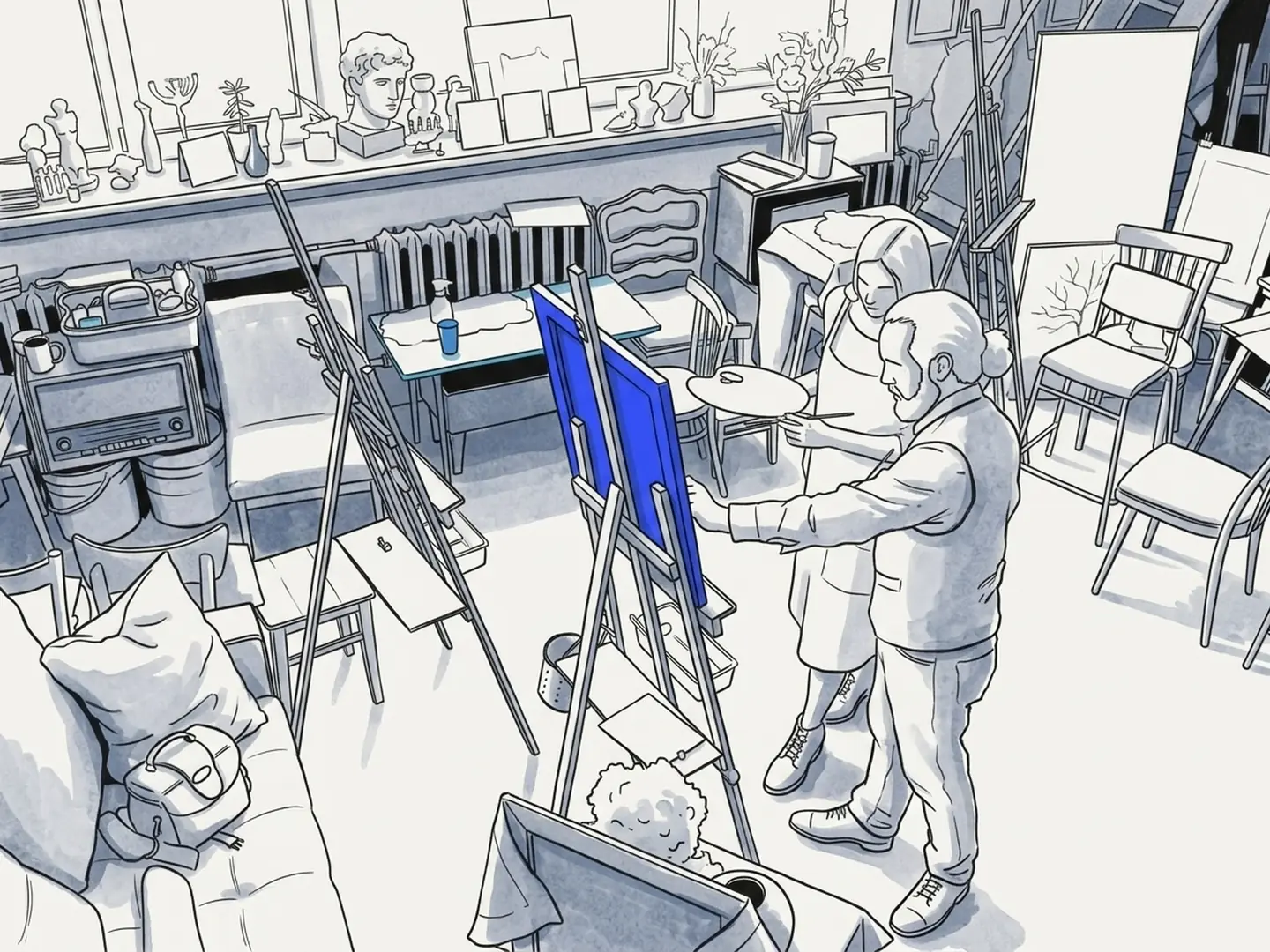
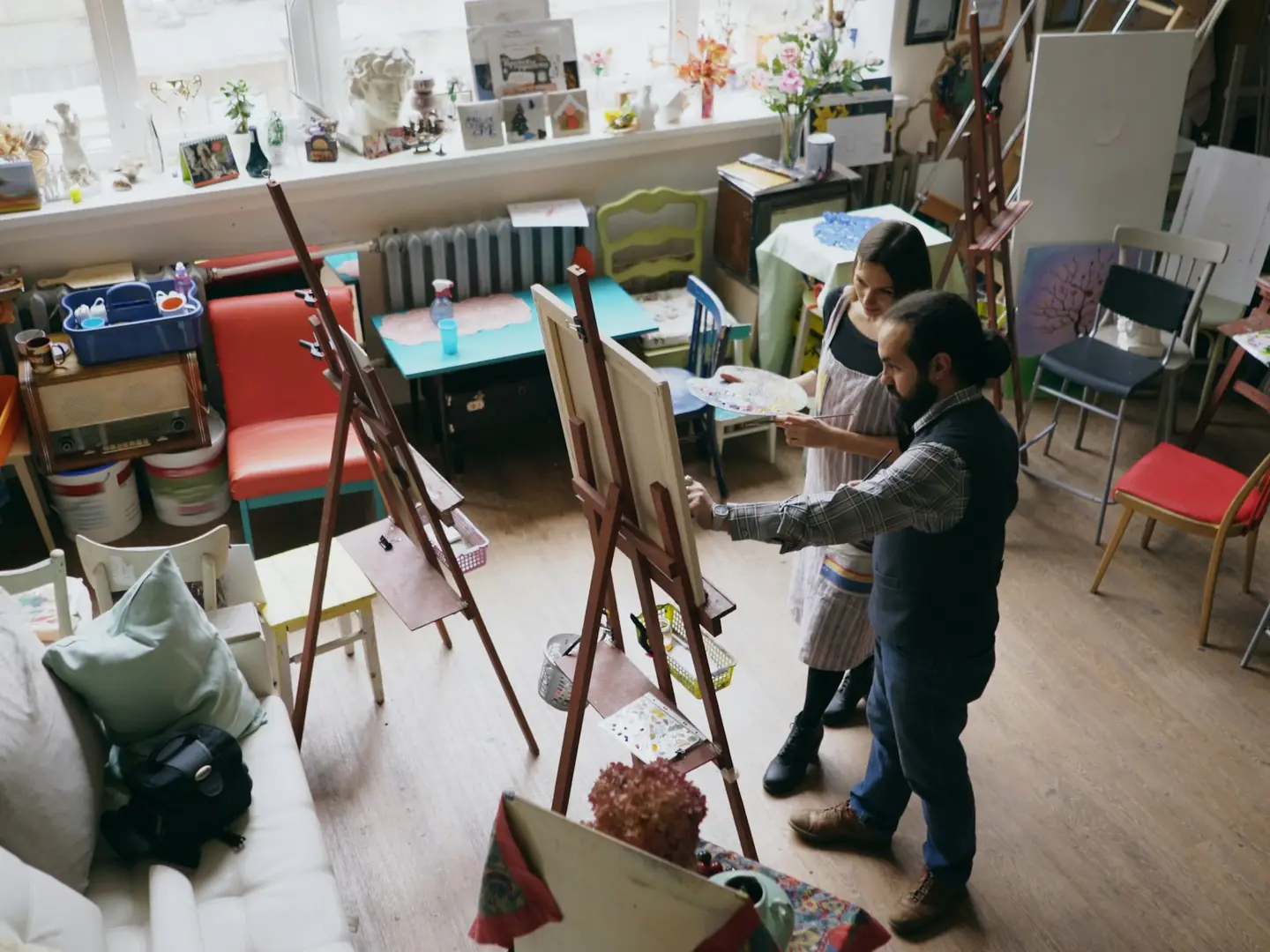
Cover: an artist teaching a young painter at an easel in a studio. Photo: Vitaly Gariev, via Unsplash. Hover to see it.
In April 1618, the painter Peter Paul Rubens wrote to Sir Dudley Carleton, the English ambassador in The Hague. He wanted Carleton’s collection of antique sculpture, and he offered a group of paintings in exchange.
The list was unusually candid. Rubens noted which paintings were by his own hand and which had been painted by his workshop and retouched by him. Carleton noticed. He turned down one canvas, probably a lion hunt, because it wasn’t entirely by Rubens. Rubens replied that he’d retouched it so thoroughly it would be hard to tell apart from his own work, and in the end it went into the deal.
I recognised that workshop when I built this site with AI. The assistants did the brushwork, and my job became direction, judgement and the final hand. And the buyer, like Carleton, still cares which is which.
What I built
This is the first essay in a series on AI in business, and I want to start with something I’ve actually done rather than something I’ve read about.
In October I built this site in about eleven days with Claude (in Claude Code) and Gemini. It has a scroll-driven machine that breaks apart into the three layers of my revenue engine model, a writing gallery, a career section and the essays you’re reading. It runs for about A$16 a year, which is the domain. Hosting and email forwarding are free.
I’m a marketer, not a developer. So the interesting part for me wasn’t that AI could write the code. It was where my time went instead - and most of it went on deciding what I wanted, not on building it.
So I’ve broken it into three parts: direction is the job, give the AI separate jobs, and check the AI’s version of you.
1. Direction is the job
My first idea was a head made of glowing strings that morphed into my face and turned with the cursor. Claude built it. We spent many rounds fixing gaps at the neck and chin as the head turned. Then I dropped the whole idea. The only thing I kept was a lesson: I don’t like cursor-driven effects.
The second and third ideas went the same way, until Claude searched design galleries and I picked one site, Der Baukasten, as the reference. From then on every decision had something to aim at. The same thing happened later with the blog layout: one named reference, and it was right first time.
The other thing that sped me up was seeing options side by side. I’d spent several rounds saying the machine drawing “still doesn’t feel like pen and ink”. Then Claude made three versions of the style and put them next to the target, and it was obvious in one look that the hatching was the problem. One round of side-by-side options settled what many single attempts hadn’t. The logo went the same way: Gemini drew a sheet of nine, and I picked from it straight away.
Feel is the hardest thing to brief in words. “The ease is too quick” took three rounds to get right. “Like Der Baukasten’s panels” worked first time.
For me, that’s the biggest shift. AI makes building cheap, so the bottleneck moves to deciding. A day spent on a brief - light or dark, motion rules, three reference sites - would have saved me the whole face detour.
2. Give the AI separate jobs
The hardest part of the build was turning a 2D drawing into a 3D machine that could come apart. It took 15 rounds of renders in Blender, and what made it converge was splitting the work: one model built and rendered, and a second, stronger model reviewed each render against the target with side-by-side overlays.
The reviewer caught real problems. But it also got things wrong - it blamed a 6° camera error that turned out to be about 2°. The breakthrough came from my own feedback, that the shading was uniform and didn’t follow a light. And when round 7 went backwards, switching the builder to the stronger model and making it check its own work (“does anything read as a face?”) produced the version I approved.
I think the same split applies between tools. Gemini was better at exploring ideas visually - the logo sheet beat every mark Claude drew by hand. But Gemini’s image wasn’t a production file, so Claude redrew it as clean geometry for the favicon and nav. Image generation for taste, code for production.
And it helps to ask about delivery early. Asking “how small can this be?” turned a video plan of 8.6 to 33 MB into a 1.4 MB set of parts animated in the browser, which also runs more smoothly.
Separate jobs need guard rails too. At launch, Cloudflare’s command-line tool quietly rewired the project for a server it didn’t need and tried to publish everything, including draft pages and photos. The build failed, so nothing leaked. Now the deploy script refuses to publish anything from the draft folders.
3. Check the AI’s version of you
Once the site was live I built a system for the essays: deep research, fact-checking, story options, a draft in my voice, an ink-drawn cover, publish.
The fact-checking mattered more than I expected. The research report had mis-credited studies and inflated numbers - a “21x” lead response figure attributed to HBR that isn’t from HBR, and “60% of forecast deals fail” where the source says fewer than half close. When I updated an essay I’d written in 2019, two studies I’d cited had since failed to replicate. Saying so became part of the essay.
The harder thing to catch was the AI’s version of me. Nearly every draft had a line or two that sounded like me but wasn’t something I’d said - “it took the fear out”, “I rely on premortems”. They’re fluent, plausible and false, which is exactly why they’re easy to miss. Flagging them became a standing step.
What made this manageable was writing things down. The house rules - how Docusign results can be described, no personal contact details, no invented metrics - sit in a file every session reads. The essay process is saved as a skill, so each essay follows the same steps. And the drafting is a collaboration rather than a hand-off. I edit every draft, and each edit is logged as a rule about my tone, so the next draft starts closer to how I actually write. The human in the loop isn’t a final approval step. It’s how the voice gets built.
That’s Rubens’s letter again. The AI does most of the brushwork. My job is to know which parts are by my own hand, and to make sure the rest is good enough to sign.
What good looks like
A few rules I’d follow on any build with AI:
- Write the brief first. Light or dark, motion rules, and what words like “pen and ink” mean, with an example.
- Pick one reference and say “this one”. It turns every later decision into a comparison.
- Ask for options side by side. Three versions next to the target beat three rounds of single attempts.
- Separate the builder and the reviewer. And give the builder the stronger model when quality slips.
- Use image generation for taste, code for production. Explore in pictures, ship in clean files.
- Fact-check the research, and the AI’s version of you. Trace every figure to the original, and cut anything you didn’t say.
- Write the rules and the process down. A file of house rules and a saved process make the next round faster and more consistent.
For me, yes and no
There’s a fair challenge here. Couldn’t I have used a template and been live in an afternoon?
Yes. For most people who need a website, a template is the right answer, and a lot of my eleven days went on a hero animation that a template wouldn’t have needed.
But the site isn’t really what I’m keeping. What I’m keeping is a way of working - a brief, a reviewer, a checking step and a written process - that now produces essays, covers and research in a fraction of the time. That’s the part I think applies to business more broadly: AI didn’t remove the work, it moved it from making things to deciding and checking them.
Where to start on Monday
- Write a one-page brief before you open a tool. Include three references and the rules you already know you’ll want.
- Ask for three options next time. On your next AI task, ask for three versions side by side instead of one attempt.
- Start a house rules file. Write down what the AI must never do with your name, your numbers and your employer, and give it to every session.
Views are my own, not my employer’s.